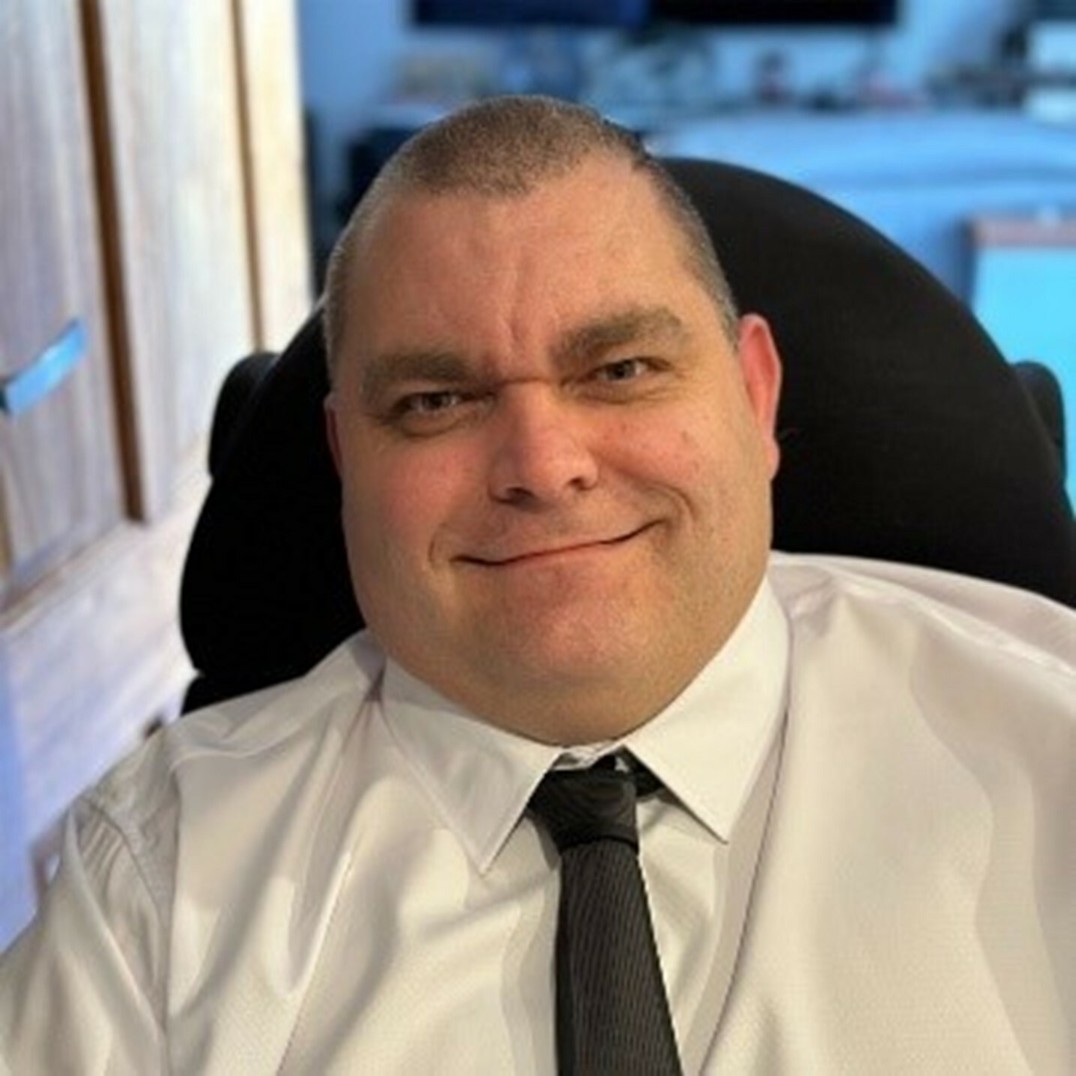
As Scope marks its 75th anniversary, we are highlighting the many people who have helped make Scope the organisation it is today.

We spoke to Mary-Ann Stares, Manager DLO West, whose extensive and varied career at Scope started at Shannon Park, one of Scope’s flagship Day and Lifestyle Options centres.

When did you start working at Scope?

I started working for Scope in 1990. It was known as the Spastic Society of Victoria at the time.

What was your role when you first started working at Scope?

I started working in the kindergarten at our Shannon Park site called ‘the Spastic Society Kinder’, as a Toilet Training Aid. My role was to toilet train children – a very specific job! I quickly transitioned to become a Kindergarten Assistant.

It was a ‘reverse integration kinder’, where children who attended mainstream kindergarten joined the Shannon Park kinder once or twice a week.

As part of my role as a Kindergarten Assistant, I was also supporting a Conductive Education program. Conductive Education is a comprehensive method of learning by which individuals with neurological and mobility impairment learn to specifically and consciously perform actions that children without such impairment learn through normal life experience.

I was lucky enough to work alongside a Conductive Education specialist from Budapest, who the Spastic Society had brought out to run the Conductive Education program.

The program focused on children with disabilities going through the motions of crawling. We would reach over the top of the children and do hand-over-hand crawling so they could memorize the movement. It was a fascinating program.

What was different when you started work at Scope?

When I started there was such a big focus on hands-on therapy, not just for early intervention, but for school age children and adults also.

And the therapists ran the programs. For example, if we had a customer craft group, it was run by a therapist, and assisted by Disability Support Workers. And we were taught and mentored by therapists.

While a lot of things have changed since I started, Scopes values and vision have never faltered. The people we support have been, and always will be, at the heart of what we do.

What are some of the changes you've seen during your career in the disability sector?

The first big change that I saw was the introduction of Futures for Young Adults. It’s a program that provides support to young people with disability who need additional support to what is available via mainstream and other community, employment or further education programs.

When I first started working at Shannon Park there were no real programs for people with disability once you turned 18. Consequently, there were adults in their thirties attending school alongside children because there was nowhere else for them to go. They were just stuck in school forever.

There must have been a push at the time, to get them out of school and into meaningful employment, education or other activities.

The Spastic Society had already recognised this gap and had an Adult Training Centre. So, when Futures for Young Adults was introduced, we exploded! We went from having about 8-10 customers to 24 customers in one year.

In-house we offered therapy, hydro and community access - a lot of the same things we do today. We also supported customers to go to the Gorden TAFE in Geelong. Certificate 1 and Certificate 2 in Education were the most popular for customers to pursue, and they could get a study allowance when attending the Gorden.

I also saw major changes with the introduction of the NDIS. We were lucky enough to be part of the NDIS trial. It was exciting to be involved in that building process – we were building the ship as we were sailing it.

I think it was such a shift for anyone living with a disability. And I have seen that the NDIS has provided so many opportunities for people to have real choice and control of their life.

What is one memory or story you can share about your time working at Scope?

A memory that stands out from the early days is when all employees were informed that the Government had no money to support the organisation, and the organisation consequently had no money and may not be able to pay staff wages. There was also no money to purchase supplies. They weren’t sure how or when it would be resolved.

At the time I was one of a small group of Disability Support Workers working in the Adult Training Room, which is now referred to as Social Connections.

There was no sense of panic, no one was up in arms about it - everyone just pitched in and pulled together to make sure our customers were not impacted.

We put together our own roster to bring in supplies from home including food for cooking programs, books, activities, our own toilet paper, coffee, milk and more!

We got through this time, and Scope has since stayed strong. It is so wonderful to see the growth since those days and to be one of the biggest disability service providers in the country.

What do you see changing in the future, either at Scope or in the disability sector?

I believe the disability sector will continue to face challenges but also be presented with opportunities for growth.

There will be social and economic change for people living with disability and they will be the driving force for the outcomes that will shape the future.

I can see that disability supports will continue to change and adapt to different models of service, which may mean we will need to work differently going forward.

What are you excited to see in the future, either at Scope or in the disability sector?

I have always been excited to be part of this sector.

I have watched children grow into independent adults advocating for themselves and being real champions of change.

I'm excited to see what our client’s futures hold and to be able to be part of their journey.


What do you love about working for Scope?

I love the can-do attitude of the team and that there is real enjoyment and authenticity about what we do.

Which Scope value resonates with you the most and why?

Act Bravely is the value that resonates the most with me.

It is about the choices we make and acting with conviction and integrity. It is also about speaking out and having the mental and moral strength to act bravely even if things get uncomfortable.

If you had any advice for new support workers or people joining the disability sector for work, what would it be?

Be genuine, because clients can absolutely tell if you’re not. That’s the only bit of advice I’ve given to people throughout my career.

You’re either present with clients, working alongside them to achieve their goal, or you’re not. There’s no in between.

75 years from now, what do you hope life for people with a disability will look like?

I hope life is positively perfect for people living with disability and we are all living our best life!

Scope 75 years

Scope’s story: A stroll down memory lane

From our humble beginnings in the garage of some concerned parents to becoming one of Australia’s largest service providers - Scope's history is a testament to its unwavering dedication to creating a world where everyone can thrive.

Scope 1981

Scope 75 years

I’m going to be Scope’s next CEO… 

While it might seem far-fetched at first glance, the progress Scope is making in ensuring people with disability have a seat at the table means that it won’t be long before those with lived experience become our executive leaders.

Zane mckenzie