The Role of Occupational Therapy in Mental Health
Explore how occupational therapy supports mental health, promoting well-being through personalised strategies for daily life, coping skills, and self-care.
Our voices are our primary tool for communication, enabling us to convey our needs, emotions, ideas, and personality to the world. However, for Ella, the gift of a voice was not something she had.
Ella is a remarkable individual who, from a very young age, struggled with significant communication challenges. Born with a disability that initially left her unable to walk or talk, her mother, Mel, was told that these basic abilities might elude Ella forever.
During those early years, Ella's world was a source of frustration and sorrow for Mel, who yearned for a deeper connection with her daughter. Recalling that time, Mel shares:
“Ella couldn’t tell me her dreams, or her favourite colour, or what she wanted for her birthday. It was hard to know those things.”
The world around Ella remained silent, and her thoughts and desires remained unspoken.
Yet, hope and change were on the horizon.
With the unwavering support of Scope's Therapy team, Ella embarked on an extraordinary journey to find her voice. Through the team's guidance, Ella and Mel explored a range of specialised Augmentative and Alternative Communication (AAC) tools. After experimenting with various options, Ella discovered the 'Liberator' talker, a device that would become her voice. Mel explains:
“AAC was a bit slow going at the start, but then we got the Liberator talker. She learnt really quickly how to say her favourite foods. It was amazing to hear her voice.”
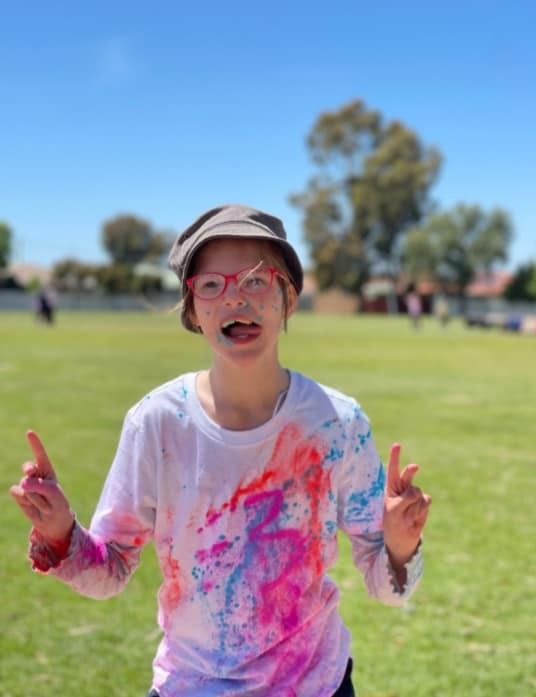
At first, the Liberator was a great tool for Ella however, Ella became reluctant to use her talker outside of home. It was at this pivotal moment that Mel recognised the need for additional support to ensure Ella's communication gains did not fade away.
Thankfully, a friend introduced Mel to Scope’s communication camp, CommuniCamp. The camp helped Ella and Mel connect with other children and families using AAC tools. Supported by Scope's speech pathologists, occupational therapists, and an AAC Mentor with lived experience, Ella discovered new ways to use her talker and connect with the world. Ella said:
“I went to CommuniCamp with Mum. We met lots of people that use AAC to talk. I learnt lots of new things. I met Kayli and had a great time.”
CommuniCamp offered more than just a service, it provided precious moments for mother and daughter to bond without the everyday pressures, fostering a deeper connection. Ella can now express her desires for lunch, communicate her feelings, and even share jokes, bringing joy and laughter.
Ella's confidence has soared to new heights, and her voice now fills the car during long drives, where she shares stories of her day, her friends, and her favourite movie characters.
The future shines brightly for Ella.