Accessible Information allows more people to engage with your content. Scope supports organisations to communicate clearly and inclusively through Easy Read and Plain Language.

Accessible Information for your organisation
Accessible communication isn’t optional. It’s part of your responsibility to your customers. We help you meet that responsibility with confidence.
What is Accessible Information?
Accessible Information includes formats that are easy to read, understand and use.
It supports people who have cognitive or intellectual disability, different literacy needs, English as a second language, and anyone who finds complex information difficult.
We deliver this expertise through two services:
Accessible Information translation services
Scope’s translation service converts your existing documents into Easy Read or Plain English, making them accessible to more people.
We work with organisations to translate a wide range of content, including policies, forms, reports, web content and customer communications.
All translations are created by specialists and informed by real‑world customer testing, ensuring your information is clear, accurate and usable.

Why work with Scope?
- Translated by a specialised and experienced team of accessible information writers
- Tested by people with varying literacy needs
- Evidence‑based approach
- Trusted by government, health, community and essential service organisations
- Leaders, with over 35 years’ experience
Accessible Information training
Build Accessible Information skills within your organisation.
Scope’s Accessible Information training equips teams to create Easy Read and Plain Language content themselves.
The training is designed for:
- Marketing and communications teams
- Customer‑facing teams
- Small teams, large organisations, government departments and agencies.
The training is practical, interactive and grounded in real‑world examples.
Training is available online and in-person across Australia. In-person training outside the Melbourne metropolitan area will incur travel costs.
About the Accessible Information training
Scope’s Accessible Information training helps organisations understand what Accessible Information is, why it matters, and how to apply it in real‑world communications.
Participants learn how Easy Read and Plain Language support people with different language requirements, cognitive disability and diverse communication needs — and how these approaches benefit wider audiences too.
The training combines expert guidance with practical exercises, giving participants the confidence to:
- Review existing content for accessibility
- Apply Accessible Information principles consistently
- Create clearer, more inclusive communications from the outset
This training is suitable for both large organisations and small teams where accessibility is a shared responsibility.
What the training covers
- Writing in Plain Language
- Structuring and designing Easy Read documents
- Communicating with audiences who have cognitive or intellectual disability, different literacy needs, English as a second language, and anyone who finds complex information difficult.
- Applying Accessible Information principles to everyday work
Who Accessible Information is for
If your organisation shares information with the public, Accessible Information helps you reach more people. We’ve supported organisations including:
- Health, disability and care services
- Government and local councils
- Educational institutions
- Community and social services
- Customer‑facing and essential services
- Corporate and professional services
Accessible communication is your responsibility
Today, over 40% (44%) of Australians have low English literacy. This includes people with disability, people from Culturally and Linguistically Diverse (CALD) backgrounds and older people living in Australia. For these people, it can be hard to understand complex documents and information — which can cause stress, uncertainty and they are unable to fully engage.
Accessible Information supports inclusion, compliance and better outcomes — for your organisation and for the communities you work with.
Scope helps you communicate clearly, respectfully and accessibly.

Easy Read and Plain Language — what’s the difference?
Plain Language removes complex language and jargon, making information clearer for a wide audience.
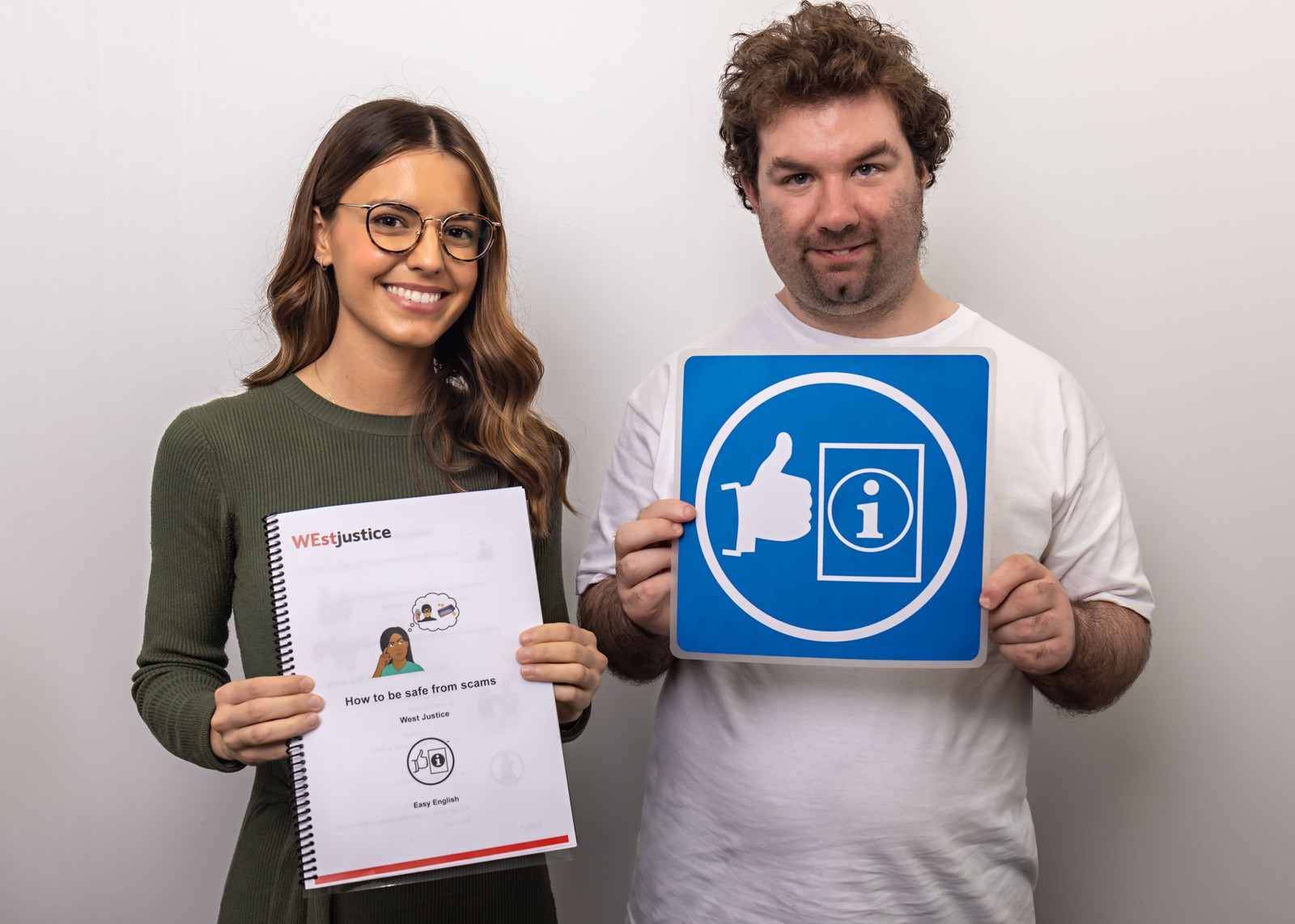
Easy Read uses simple words, short sentences and images to support understanding for people who have cognitive or intellectual disability, different literacy needs, English as a second language, and anyone who finds complex information difficult.
We help you choose the right approach for your audience and purpose.
